
What Medicare Does Not Cover
(Common Coverage Gaps)
Medicare helps millions of Americans pay for healthcare. It covers hospital visits, doctor appointments, and many medical treatments. But Medicare was never designed to cover everything related to your health or daily life.
Many people are surprised to learn there are several Medicare coverage gaps that can leave important services uncovered. Understanding what Medicare does not cover can help you plan ahead and avoid unexpected healthcare costs during retirement.
Below are some of the most common services Medicare does not pay for.
Click image below to download 👇
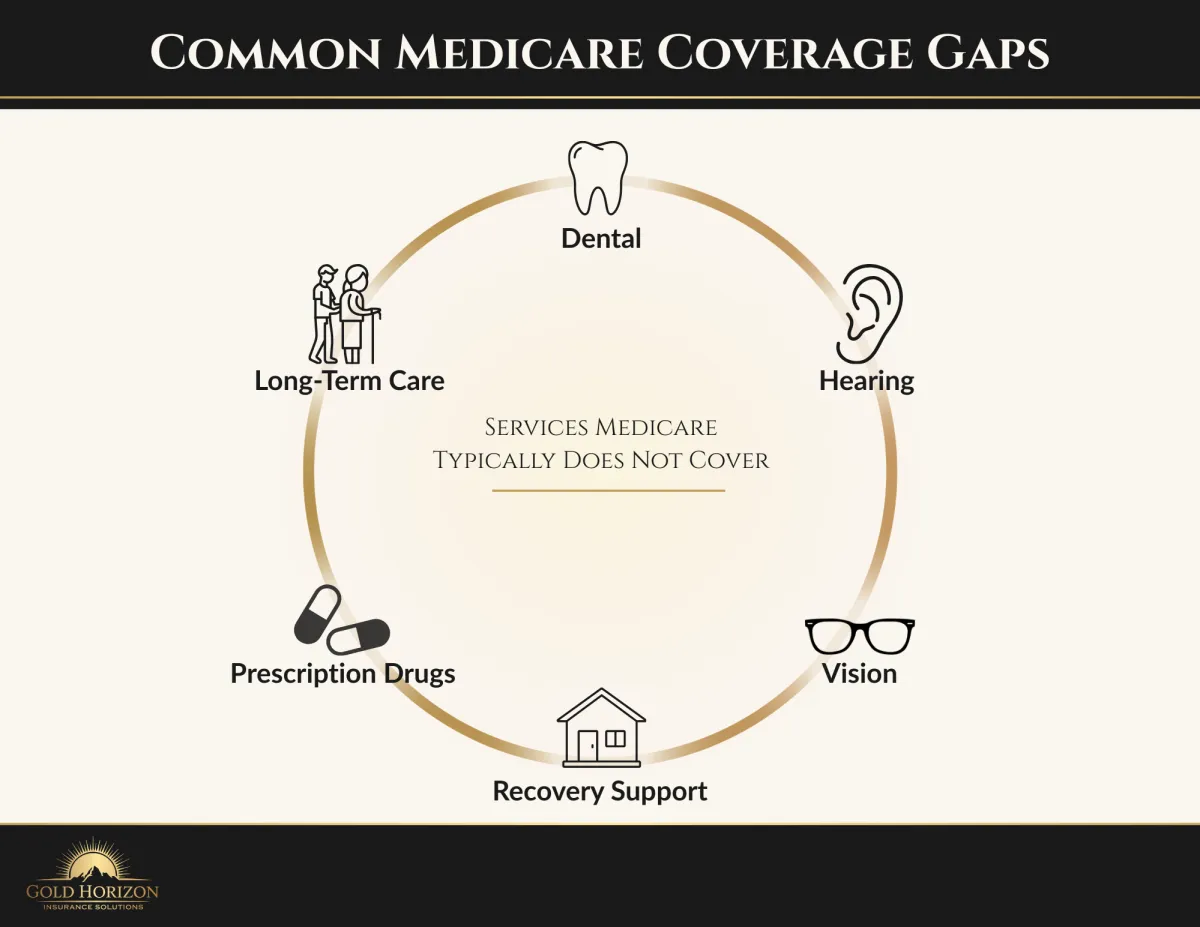
Medicare Coverage Gaps
Dental Care
Original Medicare generally does not cover routine dental services. This includes cleanings, fillings, tooth extractions, dentures, and most dental exams.
In some rare situations Medicare may cover dental care tied directly to a hospital procedure, but everyday dental care is typically paid out of pocket.
Hearing Services and Hearing Aids
Hearing support is another area where Medicare coverage is limited.
Original Medicare generally does not cover routine hearing exams, hearing aids, or hearing aid fittings.
Because hearing aids can be expensive, this is one of the most commonly discussed Medicare coverage gaps.
Vision and Eyeglasses
Medicare also has limited coverage for routine vision services.
Original Medicare usually does not cover eye exams for glasses or contact lenses, and it does not pay for most eyewear.
However, Medicare may cover certain medical eye treatments such as cataract surgery or glaucoma testing.
Many people explore Medicare Advantage plans that include dental, vision, and hearing benefits as part of their overall coverage strategy.
Recovery and Home Support After Illness
After surgery or a hospital stay, many people need additional support while recovering at home.
Some people explore additional coverage options designed to help with recovery and everyday support after illness.
Medicare may cover certain medical services, but it typically does not cover services such as transportation to appointments, household assistance, meal preparation, or extended in-home support.
Prescription Drug Coverage (Part D)
Medicare prescription coverage works differently than many people expect.
Original Medicare (Parts A and B) generally does not cover most prescription medications you pick up at a pharmacy. Because of this, many people enroll in a separate Medicare Part D prescription drug plan or choose a Medicare Advantage plan that includes drug coverage.
Prescription drug plans help cover many common medications, but each plan has its own list of covered drugs and cost structure.
Long-Term Care
Long-term care is one of the most misunderstood areas of Medicare.
Medicare may cover short-term skilled nursing care following a hospital stay, but it generally does not cover extended custodial care.
Custodial care includes assistance with daily activities such as bathing, dressing, eating, or moving safely around the home.
Healthcare Outside the United States
Most Medicare coverage is limited to healthcare services within the United States.
If you become sick or injured while traveling internationally, Medicare usually does not cover medical care received outside the country.
FAQs
How does Medicare cover dental care?
Original Medicare generally does not cover routine dental services such as cleanings, fillings, dentures, or most dental exams. In some limited cases, Medicare may cover dental care if it is directly related to a hospital procedure, but everyday dental care is typically paid out of pocket.
How does Medicare cover hearing aids?
Medicare coverage for hearing care is limited. Original Medicare generally does not cover hearing aids or routine hearing exams. Because hearing aids can be expensive, some Medicare Advantage plans may include hearing benefits.
How does Medicare cover vision and glasses?
Medicare provides limited coverage for vision care. Original Medicare usually does not cover routine eye exams for glasses or contact lenses and does not pay for most eyewear. However, Medicare may cover certain medical eye treatments such as cataract surgery or glaucoma testing.
How does Medicare cover short-term recovery care at home?
Medicare may cover certain short-term medical services at home when they are medically necessary, such as skilled nursing care or physical therapy. However, Medicare usually does not cover non-medical support such as transportation, meal preparation, housekeeping, or extended in-home assistance.
How does Medicare cover prescription drugs?
Original Medicare (Parts A and B) generally does not cover most prescription medications you pick up at a pharmacy. Many people choose to enroll in a Medicare Part D prescription drug plan or a Medicare Advantage plan that includes drug coverage.
how does Medicare cover long-term care?
Medicare generally does not cover long-term custodial care, such as help with bathing, dressing, or daily living activities. Medicare may cover short-term skilled nursing care following a qualifying hospital stay, but extended long-term care is typically not included.
How does Medicare cover healthcare outside the United States?
In most situations, Medicare does not cover healthcare services received outside the United States. Some limited exceptions may apply, such as emergencies near the U.S. border, but international medical care is generally not included.
Want a Second Set of Eyes?
If you’d like help understanding how Medicare coverage gaps may affect your situation, or reviewing options that may help address them, we’re happy to help.
If you’re located in Missouri, we provide personalized Medicare guidance in Republic and the Springfield area. Phone consultations are also available nationwide.
No pressure. No obligation. Just clarity.

Maverick Gold
Independent Medicare Advisor
© 2026 Gold Horizon Insurance Solutions. All rights reserved
We are not connected with or endorsed by the United States government or the federal Medicare program. We do not offer every plan available in your area. Any information we provide is limited to those plans we do offer in your area. Please contact Medicare.gov or 1-800-MEDICARE to get information on all of your options.
Youtube
Facebook
Instagram
TikTok